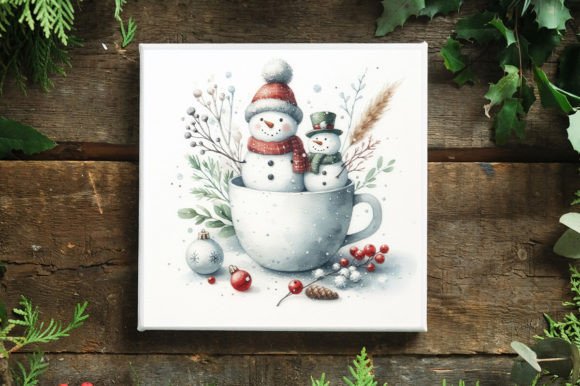
Reviewing the Watercolor Christmas Cute Snowman Design
As a designer who spends more time staring at stitch maps than actual fabric, I have developed a keen eye for what translates well from screen to thread. When I first opened the Watercolor Christmas Cute Snowman file, my initial reaction was cautious optimism. Watercolor aesthetics are notoriously difficult to replicate in embroidery because the medium relies on solid threads rather than translucent washes of pigment. However, this design manages to capture that soft, artistic bleed through clever color blending and strategic stitch placement. It is not just a pretty picture; it is a thoughtful piece of digital art that respects the limitations of the machine while pushing the boundaries of visual texture.
First Impressions and Visual Personality
The mood of this design is undeniably warm and nostalgic. It avoids the harsh, cartoonish outlines often seen in holiday motifs, opting instead for a softer, more illustrative approach. The snowman itself feels friendly and approachable, with a whimsical posture that suggests movement rather than a static pose. For those of us working in the realm of Illustrations, the charm lies in the imperfection. The edges are not razor-sharp, which actually works in our favor when stitching, as it helps mask minor registration errors that can occur during production.
The layout is balanced, with the focal point clearly defined. This is crucial for embroidery, where the eye is drawn to areas of high stitch density. The design uses varying densities to create depth, mimicking the layering of watercolor paints. This visual personality makes it versatile. It does not scream "cheap novelty item"; instead, it whispers "handcrafted quality," which is exactly the vibe we want for premium handmade product lines.
Real-World Application: The Holiday Tote Bag Scenario
To truly evaluate a machine embroidery design, you must imagine it on a physical object. I recently considered this snowman for a limited-edition run of canvas tote bags for a local boutique. Canvas is a sturdy fabric, but it has a visible weave. I needed a design that would hold its own against that texture without getting lost.
The Watercolor Christmas Cute Snowman performed exceptionally well in this context. The broader areas of fill stitch provided enough coverage to look vibrant against the natural beige of the canvas, while the lighter, more open sections allowed the fabric texture to peek through slightly, enhancing the watercolor effect. If I were using this for a sweatshirt embroidery project, the result would be equally compelling. The softness of the design complements the fuzzy texture of fleece or French terry cloth, creating a cohesive, cozy aesthetic that customers associate with high-quality winter wear.
For Etsy seller communities, this type of design is gold. It fits perfectly into the "cottagecore" and "modern holiday" trends that dominate social media. It is distinct enough to stand out in a crowded marketplace but familiar enough to appeal to a broad audience looking for a personalized gift.
Navigating Fabric and Hoop Constraints
While the design is robust, it is not without its technical demands. Embroidery is a tactile medium, and certain fabrics will fight back. I would advise caution when stitching this on very thin or stretchy materials, such as lightweight jersey knits for baby embroidery projects. The stitch density required to achieve the watercolor blend might cause puckering if the proper stabilizer is not used. A cut-away stabilizer is likely necessary here to support the weight of the threads and maintain the integrity of the shape after washing.
Additionally, consider the hoop size. This design requires a medium to large hoop to breathe. Cramping it into a small 4x4 inch hoop might compress the details, causing the subtle color transitions to merge into a muddy blob. Always check the specific dimensions of the embroidery file before purchasing. If you are planning to use this on curved surfaces like caps, ensure your machine has the capability to handle the density without distorting the front panel. An applique design version would be ideal for hats if available, but for standard stitching, a flat surface like a tote bag design or pillow cover is safer.
Dark fabrics present another challenge. Watercolor designs often rely on light, pastel tones. Stitching these over black or navy fabric requires a solid underlay or a backing patch to prevent the dark fabric from showing through and dulling the colors. Test your thread colors against your fabric choice. Sometimes, adding a white satin stitch border can help define the edges and make the colors pop, though this changes the original artistic intent.
Commercial Value and Brand Consistency
From a business perspective, the Watercolor Christmas Cute Snowman adds perceived value. Customers are willing to pay more for items that look like art rather than mass-produced graphics. This design helps build brand consistency for shops that focus on gentle, artistic, or family-oriented themes. It enhances the finished product by making it feel unique and curated.
When creating printable mockup images for your online store, this design photographs beautifully. The soft edges catch light nicely, avoiding the harsh shadows that dense, blocky designs often cast. This leads to better engagement on social media and higher conversion rates for your small shop product listings. Whether you are selling custom apparel, embroidered patch collections, or home decor, the professional finish of this design reflects well on your craftsmanship.
Practical Designer Notes for Execution
Before you commit to a full production run, follow these practical steps to ensure success:
- Test on Scrap Fabric: Always stitch out a test sample on the exact fabric you plan to use. This reveals any tension issues or color clashes.
- Check Thread Contrast: Ensure your thread palette matches the digital preview. Subtle shifts in shade can drastically change the watercolor effect.
- Review Stitch Density: Look at the stitch count. If it seems excessively high for the size, consider resizing or adjusting density settings if your software allows, to prevent fabric stiffness.
- Inspect Small Details: Zoom in on the preview. Are there tiny isolated stitches that might pull out? These may need manual editing or removal.
- Verify Licensing: Confirm the terms of use for the digital embroidery file. Ensure you have the right to use it for commercial embroidery if you plan to sell the finished items.
- Mockup in Black and White: Convert your preview to grayscale to check for contrast issues. If the design disappears in black and white, it may lack definition on low-contrast fabrics.
In conclusion, the Watercolor Christmas Cute Snowman is a standout choice for designers who value artistic nuance in their embroidery project workflows. It bridges the gap between digital illustration and tactile craft, offering a charming, professional result that resonates with modern consumers. With careful attention to fabric choice and stabilization, it can elevate your holiday collection from simple merchandise to cherished keepsakes.