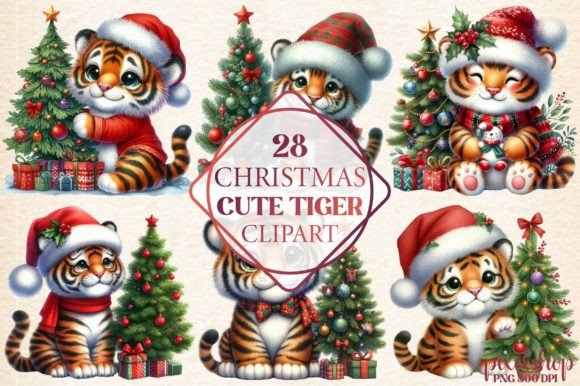
Review: Watercolor Christmas Cute Tiger Clipart for Embroidery
As a designer who spends more time staring at digitized stitch paths than I care to admit, I have learned that not every pretty picture translates well into thread. We see thousands of Illustrations flooding the market, but only a select few possess the structural integrity required for a high-quality machine embroidery design. Recently, I pulled up the Watercolor Christmas Cute Tiger Clipart to evaluate its potential for my upcoming holiday collection. My goal was not just to admire the art, but to determine if it could withstand the mechanical realities of an embroidery hoop while delivering the soft, whimsical aesthetic customers crave during the festive season.
First Impressions: Mood and Visual Personality
The immediate appeal of the Watercolor Christmas Cute Tiger Clipart lies in its gentle demeanor. Unlike bold, graphic vectors that demand attention with hard lines, this design relies on soft edges and blended tones. For an embroidery project, this presents both a challenge and an opportunity. The mood is undeniably cozy, evoking feelings of warmth and nostalgia perfect for holiday embroidery. The tiger’s expression is approachable, making it an ideal candidate for items intended for children or those seeking a touch of playful elegance in their home decor.
However, from a technical standpoint, watercolor styles can be tricky. In digital format, gradients look seamless. In embroidery, we must simulate those gradients using thread colors and stitch angles. I looked closely at the transition areas in the tiger’s fur and the surrounding festive elements. The design avoids overly complex micro-details, which is a good sign. It suggests that the digitizer understood the limitations of thread, opting for broader shapes that can be filled effectively without creating a dense, cardboard-like texture on the fabric.
Real-World Application: The Holiday Tote Test
To truly judge a design, you must imagine it stitched out. I visualized this tiger on a natural canvas tote bag design, a staple for any Etsy seller or craft business during December. The neutral background of unbleached cotton would allow the softer hues of the tiger to pop without the harsh contrast required on dark fabrics. I imagined the finished product being used for gift exchanges or grocery runs, where the durability of the stitch matters as much as the aesthetics.
Beyond totes, I considered sweatshirt embroidery. A crewneck sweatshirt provides a stable, thick base that can handle moderate stitch density. Placing the tiger on the left chest area would create a subtle, boutique-style look. Alternatively, scaling it up for the back of a jacket could make a statement piece. The key here is scale. Because the design features soft, blended edges, shrinking it too much for a small hoop size might cause the details to merge into a blob. I recommend testing it at various sizes to find the sweet spot where the tiger’s features remain distinct.
Suitability for Different Products
- Baby Embroidery: The cute factor makes this perfect for onesies or baby blankets. However, ensure the stitch count is not too high to maintain fabric softness against sensitive skin.
- Embroidered Patch: This design would translate beautifully into a merrowed-edge patch. The organic shapes fit well within circular or oval boundaries.
- Pillow Covers: A central placement on a linen pillow cover adds a festive touch to living room decor without being overly thematic.
- Custom Apparel: Ideal for family matching pajamas or personalized holiday shirts, provided the fabric is stable enough to support the fill stitches.
Technical Considerations and Fabric Choices
When working with a design that mimics watercolor, fabric choice is critical. Thin or stretchy fabrics like jersey knits require careful handling. Without proper stabilization, the pull of the fill stitch and satin stitch elements can distort the garment. I always advise using a cut-away stabilizer for knitwear to ensure the finished product retains its shape after washing. For woven fabrics like cotton or linen, a tear-away stabilizer might suffice, but testing is non-negotiable.
Dark fabrics pose another challenge. Watercolor designs often rely on light and mid-tone threads. If you stitch this on black navy fleece, the lighter colors may not provide enough coverage, revealing the base fabric underneath. In such cases, consider using an underlay technique or choosing a lighter garment color. Alternatively, this design could be adapted as an applique design, where pieces of fabric are stitched down to create the color blocks, reducing stitch count and eliminating coverage issues on dark materials.
Enhancing Brand Value and Customer Trust
For small shop product creators, the quality of your embroidery directly impacts brand perception. A muddy, poorly stitched tiger looks amateurish, while a clean, crisp execution signals professionalism. The Watercolor Christmas Cute Tiger Clipart offers a unique selling point because it differs from the standard, rigid clipart found everywhere. It feels hand-painted, which aligns well with the handmade product ethos. When customers see this level of artistic nuance in a personalized gift, they perceive higher value, justifying a premium price point.
Moreover, using distinctive design assets helps in building brand consistency. If your shop specializes in whimsical, nature-inspired goods, this tiger fits seamlessly into your narrative. It enhances buyer engagement because it stands out in thumbnail images on platforms like Etsy. A clear, well-stitched mockup can significantly boost click-through rates, turning browsers into buyers.
Practical Designer Notes for Best Results
Before committing to a large production run or listing this item in your store, follow these practical steps to ensure success:
- Test on Scrap Fabric: Always stitch a sample on the exact fabric you plan to use. Check for puckering or thread breaks.
- Check Thread Contrast: Lay out your thread spools next to the design preview. Ensure there is enough distinction between adjacent colors to maintain the watercolor effect without losing definition.
- Review Stitch Density: If the design feels too stiff after stitching, consider reducing the density in your editing software or requesting a lighter version from the creator.
- Inspect Small Details: Zoom in on the eyes and whiskers. These fine details often use running stitch or thin satin columns. Ensure they are not so fine that they disappear or break easily.
- Mockup Testing: Create digital mockups on both light and dark backgrounds to see how the design performs visually before stitching.
- Licensing Verification: Confirm the license terms. Ensure you have commercial rights if you plan to sell custom apparel or digital embroidery file derivatives.
Final Verdict
The Watercolor Christmas Cute Tiger Clipart is a strong contender for holiday-themed projects, provided the embroiderer respects its technical nuances. It is not a plug-and-play solution for every fabric type, but with proper stabilization and thread selection, it yields beautiful results. For commercial embroidery professionals and hobbyists alike, it offers a fresh alternative to traditional holiday motifs. By treating it with the care it deserves, you can create embroidery project outcomes that delight customers and elevate your brand. Remember, the magic lies not just in the design file, but in the thoughtful execution of each stitch.