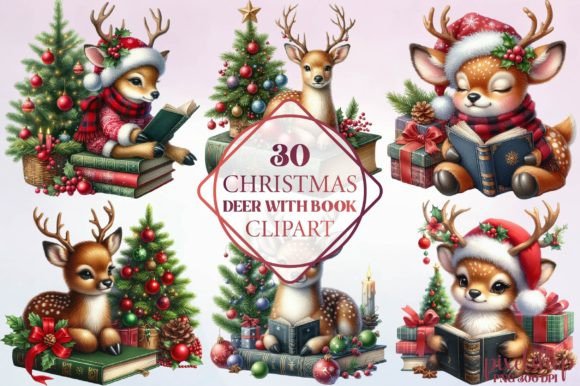
Reviewing Christmas Deer with Book Clipart
As an embroidery designer who has spent countless hours digitizing, testing, and stitching thousands of designs, I approach every new file with a critical eye. We all love the allure of Freebies, but in the world of professional machine embroidery, not every free download is ready for prime time. Today, I am taking a close look at the Christmas Deer with Book Clipart to determine if it holds up under the needle. This isn’t just about whether the image looks cute on a screen; it is about how it translates into thread, how it behaves on different textiles, and whether it adds genuine value to a finished product.
The first impression of this design is one of quiet nostalgia. In a market saturated with loud, overly complex holiday motifs, the simplicity of a deer engaged in reading creates a serene, cozy mood. For embroidery designers and Etsy sellers, this thematic subtlety is a powerful tool. It appeals to customers looking for sophisticated holiday decor rather than kitschy novelties. The visual personality suggests warmth and intellect, making it an ideal candidate for items associated with comfort, such as pillow covers, library-themed tote bags, or personalized gifts for book lovers.
Real-World Application and Stitch Performance
To truly evaluate the Christmas Deer with Book Clipart, I mentally placed it into several real-life production scenarios. Imagine preparing a custom embroidered tote bag for a local bookstore’s holiday promotion. The design’s layout, assuming it maintains clean lines, would sit beautifully on the flat surface of a canvas tote. However, the success of this embroidery project hinges on the digitizing quality. If the book details are too fine, they may get lost in the fabric texture. A well-digitized version should utilize a combination of fill stitch for the deer’s body to provide coverage and satin stitch for the book edges to create definition.
Another strong use case is sweatshirt embroidery. Holiday sweatshirts are a staple for small shop products. When applied to fleece or cotton blends, the design needs to breathe. If the stitch density is too high, the fabric will pucker, ruining the professional look of the handmade product. Conversely, if the density is too low, the underlying fabric might show through, especially if you are using light thread colors on a dark garment. I recommend running a test stitch-out on scrap fabric that matches your final product’s weight and stretch. This step is non-negotiable for maintaining customer trust and brand consistency.
For those creating baby embroidery items, such as bibs or onesies, the scale of the deer becomes crucial. A design that looks balanced on a large apron might appear cluttered on a small baby garment. The "book" element adds a charming narrative layer, suggesting a "quiet night before Christmas" theme that parents adore. However, ensure that any tiny details in the book illustration are not so small that they become fragile or prone to breaking after repeated washing. Durability is key for personalized gift items that are meant to be cherished and used.
Navigating Fabric and Hoop Constraints
While the aesthetic appeal is strong, there are technical areas where caution is required. Curved surfaces, such as caps or hats, present a challenge for any design with horizontal width. If the Christmas Deer with Book Clipart is wide, it may distort when stitched onto the curved panel of a baseball cap. In such cases, consider resizing the design to fit within a smaller hoop size or adjusting the placement to avoid the seam lines. Additionally, textured fabrics like terry cloth or heavy knits can swallow up fine details. If the book pages are rendered with thin running stitch lines, they might disappear into the pile of the fabric. In these instances, increasing the stitch thickness or simplifying the internal details can improve visibility.
Dark fabrics also require strategic planning. If you are stitching a light-colored deer on a navy or black background, you must ensure the digitizer has included proper underlay stitches. Without adequate underlay, the top threads may shift, and the dark fabric may peek through, compromising the clarity of the image. Always check thread color contrast before starting a production run. A printable mockup can help visualize the final look, but nothing replaces a physical test stitch. Use a stabilizer that matches your fabric type—cut-away for stretchy knits and tear-away for stable wovens—to support the stitches and prevent distortion.
Commercial Viability and Brand Value
For craft business owners and commercial embroidery professionals, the licensing terms of any digital embroidery file are paramount. Since this is categorized under Freebies, it is essential to verify whether the creator allows commercial use. Can you sell finished items featuring this deer? Can you use it in marketing materials? Never assume. Confirming licensing before selling finished items protects your business from legal issues and ensures ethical practice. If the license permits commercial use, this design can be a valuable asset for holiday collections, adding variety to your design assets without increasing overhead costs.
The visual appeal of the Christmas Deer with Book Clipart contributes directly to perceived product value. A clean, well-stitched design signals professionalism. It enhances buyer engagement because it tells a story. Customers are not just buying a stitched deer; they are buying the feeling of a cozy winter evening. This emotional connection drives sales for small shop product listings. Whether you are creating an embroidered patch for a jacket or a detailed centerpiece for a holiday table runner, the clarity of the stitching reflects the quality of your brand.
Practical Designer Notes for Best Results
To get the most out of this design, follow these practical steps before committing to your final fabric:
- Test on Scrap Fabric: Always stitch a sample on the same material you plan to use for the final product. Check for puckering, thread breaks, or registration issues.
- Check Thread Colors: Select thread colors that complement the fabric. High contrast works for bold statements, while tonal colors offer a subtle, elegant look.
- Review Stitch Density: If the design feels stiff after stitching, the density may be too high. Adjust your machine tension or choose a lighter stabilizer.
- Confirm Hoop Size: Ensure the design fits comfortably within your hoop, leaving enough margin for the frame to grip the fabric securely.
- Inspect Small Details: Zoom in on the book elements. If lines are too thin, consider simplifying them or using a thicker thread weight.
- Test Black and White Mockups: View the design in grayscale to check for value contrast. This helps identify areas that might lack definition.
- Use Proper Stabilizer: Match the stabilizer to the fabric. Wrong stabilizer choice is the most common cause of poor embroidery results.
- Verify Licensing: Read the terms of use carefully. Respect the creator’s rights and understand your permissions for commercial sales.
In conclusion, the Christmas Deer with Book Clipart offers a charming, versatile option for holiday embroidery projects. Its success depends on thoughtful application, careful technical execution, and adherence to licensing guidelines. By treating this free resource with the same rigor as a paid premium design, you can create stunning, high-quality products that resonate with customers and elevate your brand. Whether for personal enjoyment or commercial gain, this design has the potential to become a seasonal favorite when handled with professional care.